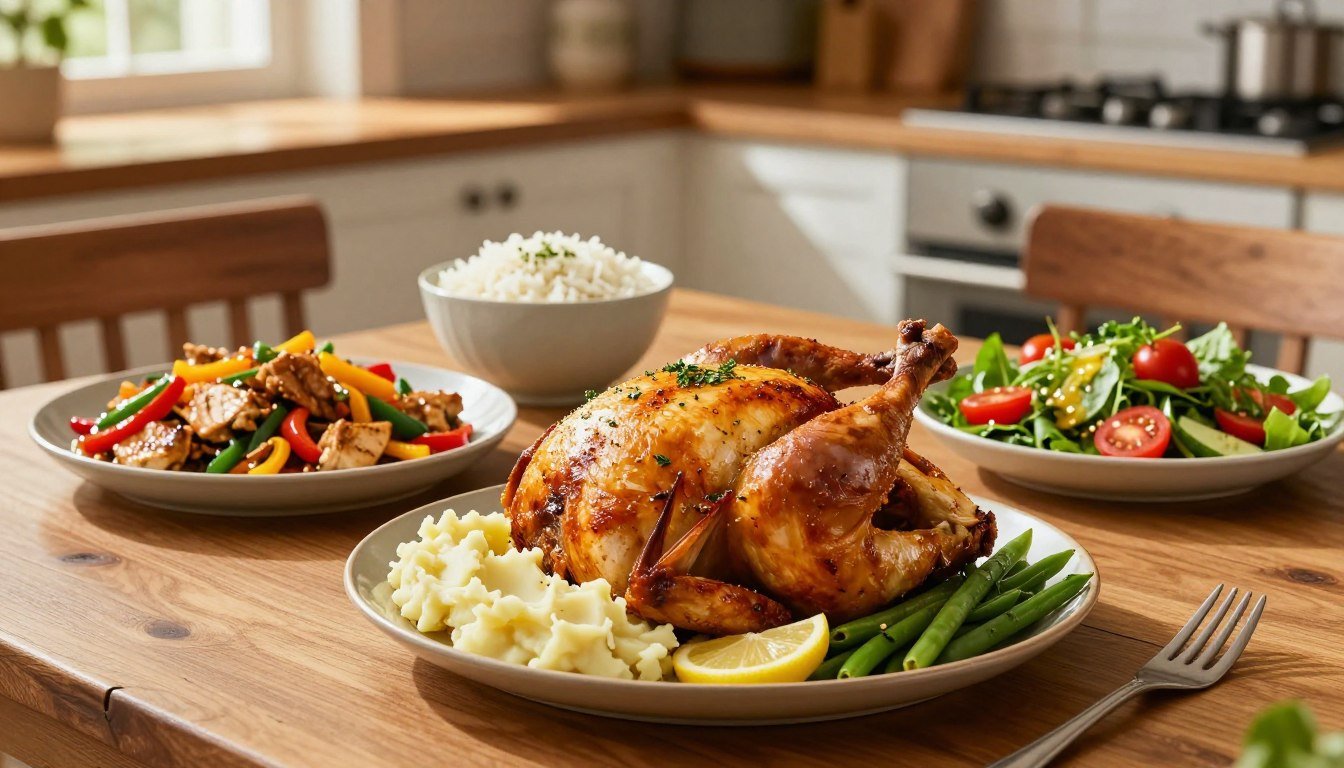
The most dependable chicken dinner recipes give you choices for busy weeknights and slower comfort-food nights. A one-pan dinner is a dinner cooked using one pan or tray for its main components. With 25 picks spanning quick skillet meals, comforting classics, rice dishes, fresh bowls, and crispy chicken, you can match dinner to your time and appetite.

You will find options for different cooking styles and moods, plus practical details to help you decide what fits tonight. Some meals keep the work simple; others make room for a richer sauce, a crisp coating, or a lively mix of flavors.
Key Takeaways
- Start with the cooking time and number of pans you want to manage.
- Choose a flavor direction that suits your appetite, from bright citrus to rich tomato sauce.
- Use rice, pasta, vegetables, or toppings to shape a complete dinner.
- Match the chicken cut to the recipe’s cooking method.
- Consider whether you want useful leftovers for another meal.
Begin with quick weeknight options when time is tight. Richer, more celebratory dishes follow for evenings when dinner can take center stage.
Which Chicken Dinner Recipes Fit a Busy Weeknight?
When your evening leaves only one pan and a half-hour dinner window, Cini ‘Tini Chicken Piccata is a practical pick. It comes together in 30 minutes in one pan, so you can focus on one recipe instead of juggling several dishes. That makes it a useful choice when the calendar is full and dinner still needs to feel complete.
A useful shortlist of top 10 chicken dishes can represent different cooking styles rather than claim one unsupported ranking. Before you choose a recipe, check its total time, how many pans it uses, how much prep it needs, and whether you need to make a separate side. Those details often matter more than a recipe’s name on a packed night.
For a busy evening, favor a recipe with a clear time, few pans, and manageable prep.
These checks help you see the real workload before you start. A recipe may cook quickly but still ask for several separate components, so look at the full sequence and not only the stated cooking time. If a side is optional, you can also decide whether your table needs one tonight.
The details here do not include serving counts or exact ingredient quantities for this pick. Check the recipe itself for the amounts you need, then consider who is eating and what you plan to serve beside it. That keeps your shopping list grounded in the actual meal.
Once low-effort cooking is covered, chicken breast offers another direction: familiar dinners with sauces and presentation that can feel more polished.
What Makes a Chicken Breast Dinner Feel Special?
A distinctive sauce can make a familiar chicken breast dinner feel ready for guests without changing the cut. A focused flavor, such as herbs, garlic, or a creamy finish, gives each dish its own character. These three choices show how sauce can shift a weeknight favorite toward a more polished main.
For at-home inspiration, searches for fine dining chicken breast recipes or fine dining chicken recipes as a main course can point toward thoughtful flavor pairings. The phrase 5 star restaurant chicken recipes may also describe the style someone wants, but no star rating or restaurant pedigree is established for these dishes. A rich sauce alone does not prove either claim.
| Dish | Chicken cut | Defining sauce or flavor | What makes it feel special |
|---|---|---|---|
| Creamy Tuscan Chicken | Chicken breast | Garlic, tomatoes, and cream | A rich, savory sauce with tomato color |
| Cowboy Butter Chicken Skillet | Chicken breast | Buttery, herby, zingy sauce | A lively sauce balances familiar chicken |
| Chicken Alfredo | Chicken breast | Creamy, cheesy sauce | Tender chicken meets a classic pasta-style finish |
The table makes the choice about flavor as much as the main ingredient. Garlic, tomatoes, and cream create one kind of richness; herbs and a zingy butter sauce bring a sharper edge. Chicken Alfredo leans into a creamy, cheesy finish that feels especially satisfying when you want a hearty dinner.
For a guest-ready plate, keep the main flavor clear rather than adding several competing sauces or toppings. You can choose a simple side that gives the meal contrast, then let the chicken and its defining sauce stay in focus.
After these polished breast dishes, one-pan and tray meals offer another advantage: they can make cleanup simpler by cooking the main components together.
Which Chicken Dinners Need Just One Pan or Tray?
If you want the chicken and vegetables to cook together instead of managing several pans, a sheet-pan dinner can simplify the evening. One tray also gives you a clear view of how the ingredients fit together. The two dishes here take different routes, one sweet and tangy, the other savory with crisp noodles.
Sheet-pan meals are useful when you want the main components gathered in one place, though the recipe still determines its exact method. Think about whether you want a saucy finish or more texture from ingredients cooked under high heat. The visible color and browned edges can help you picture the result, much like browsing gourmet chicken recipes with pictures, without assuming photos are available here.
Sweet and tangy chicken on a sheet pan
Sheet-Pan BBQ Pineapple Chicken combines barbecue sauce and pineapple for a sweet, tangy flavor with a hint of spice. That mix gives the tray a bright, glossy look, with the fruit adding a clear contrast to the sauce. Choose it when you want a lively flavor rather than a mild, savory dinner.
The combination has more than one note, but it still has a recognizable center: barbecue with fruit and a little heat. That makes it an easy flavor direction to understand before you begin. A tray meal can also keep the evening’s main components together instead of spreading dinner across several pieces of cookware.
Crisp noodles from a sheet pan
Sheet-Pan Crispy Ramen takes a more savory route. Chicken thighs cook with ginger, garlic, soy-based stir-fry sauce, broccoli, snow peas, and scallions, then ramen finishes under the broiler. The final broiler step gives the noodles their crisp finish, contrasting with the tender chicken and vegetables.
Choose this recipe when crisp noodles and a mix of vegetables sound better than a sweet-tangy sauce. Other familiar sheet-pan styles include Thai red curry chicken and vegetables, maple-bacon chicken thighs, and one-pan garlic Parmesan chicken. Those are examples of the style, not additional numbered picks or instructions here.
Tray dinners keep the components together; rice-based meals offer a different kind of complete dinner, with the grain acting as a central part of the plate.
Which Chicken and Rice Meals Work as a Complete Dinner?
When you want the starch and chicken to form one meal, a rice-centered dinner gives you a clear starting point. Choose by format: Arroz con Pollo is a one-pot meal, a slow-cooker bowl has several components, and a coconut-rice pairing brings its own distinct flavor. Each choice builds dinner around rice in a different way.
Arroz con Pollo is a one-pot meal that makes leftovers you can enjoy through the week. The other options present chicken with rice as a bowl or pairing, so their toppings and flavor accents help set them apart. The table compares those formats without adding serving counts or cooking times.
| Dish | Rice | Cooking format | Distinctive toppings or flavor |
|---|---|---|---|
| Arroz con Pollo | Rice in the one-pot meal | One pot | Leftovers can be enjoyed through the week |
| Crockpot Chicken Bowls with Yellow Rice and Cilantro Pesto | Yellow rice | Slow-cooker bowl | Saucy shredded chicken, pickled onions, greens, cilantro pesto |
| Ginger Peanut Chicken with Coconut Rice | Coconut jasmine rice | Chicken with a rice pairing | Peanuts, cilantro, and lime |
Crockpot Chicken Bowls with Yellow Rice and Cilantro Pesto suit you if a layered bowl sounds appealing. Saucy shredded chicken sits with yellow rice, pickled onions, greens, and cilantro pesto, giving the bowl several distinct parts. It is a slow-cooker format rather than a one-pot rice dish.
Ginger Peanut Chicken with Coconut Rice takes another approach, using quick-marinated chicken alongside coconut jasmine rice. Peanuts, cilantro, and lime supply the stated finishing flavors. You can choose it when you want those flavors to lead, rather than a one-pot meal or a bowl with greens and pickled onions.
Rice can make a dinner feel complete, but some evenings call for a softer, cozier plate. From here, turn toward comforting fillings and warm tomato gravy.
What Are the Coziest Chicken Dinners for Comfort Food Nights?
On a cold evening, a warm, filling chicken dinner can answer a comfort-food craving. Start with texture: Chicken Pot Pie with Biscuits has a creamy chicken-and-vegetable filling under a golden biscuit topping, while Butter Chicken Meatballs bring mildly spiced tomato gravy. Both feel substantial, though they offer different kinds of comfort.
Chicken Pot Pie with Biscuits puts a soft filling beneath a golden top, making the contrast part of the meal. Butter Chicken Meatballs take a sauce-led route, with tomato gravy enriched by butter and cream. Choose based on whether you want a biscuit-topped filling or meatballs in warm, mildly spiced gravy.
Use these cues to narrow down what sounds good tonight:
- A creamy filling if you want a soft, spoonable center.
- Tender chicken as the texture you want in the main.
- Warm spices for a gently seasoned, cozy flavor.
- A substantial topping or accompaniment to round out the meal.
Marry Me Chicken is a familiar rich-sauce style, and creamy chicken enchiladas are another comfort-food variation. They may suit some tables, but a rich dish is not automatically right for every dietary need. Consider your own preferences and requirements when you choose a dinner.
These cozy choices rely on hearty fillings or sauce. If you want a similarly satisfying meal built around a different base, pasta and gnocchi offer another direction.
Which Pasta and Gnocchi Dinners Pair Well With Chicken?
A pasta craving points toward Chicken Pesto Pasta, while a skillet meal built around dumpling-shaped pasta points toward Caprese Chicken Gnocchi Skillet. The useful difference is the base: one uses pasta and pesto, and the other combines pan-roasted chicken with store-bought gnocchi. Both keep familiar ingredients at the center.
Chicken Pesto Pasta takes 30 minutes, uses store-bought pesto and six other ingredients, and is made in one pan. That combination makes it a practical option when you want pesto flavor without making the pesto yourself. The stated details identify its time and format, not exact prep steps or ingredient amounts.
Pesto pasta for a quick dinner
Choose Chicken Pesto Pasta when you want the familiar pairing of chicken and pesto with pasta. Store-bought pesto can simplify the flavor component, and using one pan keeps the format straightforward. The recipe takes 30 minutes and uses one pan, so you can judge its fit against the time you have.
The pesto gives this meal a clear herbal direction, while the chicken makes it a dinner rather than a side of pasta. Its six other ingredients help describe the recipe’s scope, but the exact list and amounts belong to the recipe itself. You do not need to infer additional prep steps from those details.
Gnocchi with Caprese flavors
Caprese Chicken Gnocchi Skillet combines pan-roasted chicken and store-bought gnocchi. Buying the gnocchi can save you from making that component from scratch, while the skillet format gives the meal a simple serving style. The supplied details do not specify its cooking time or exact ingredient list.
If you want another familiar tomato-and-herb direction, bruschetta chicken pasta is a related idea. It is not one of the numbered picks here, and no specific instructions are needed to make the comparison. Choose between pesto pasta and gnocchi by the base you want, then let the flavor guide your side.
Pasta and gnocchi bring a fuller, more substantial feel. For a brighter change of pace, lemon and fresh herbs can shift chicken dinner toward a livelier flavor.
How Do Lemon and Herbs Brighten Chicken Dinner?
If a rich sauce feels too heavy tonight, citrus and herbs offer a brighter direction. Fresh flavor comes through in Cilantro-Lime Chicken, where chicken thighs meet lime juice and chopped cilantro. For a different balance, 5 Ingredient Lemon Chicken with Asparagus pairs lemon and asparagus with a honey-butter sauce.
Cilantro-Lime Chicken uses a minimal ingredient list and is ready in under an hour. Its lime and cilantro combination gives the dish a clear herbal, citrus-led profile. The thighs are marinated with lime juice and chopped cilantro, so those flavors are part of the chicken’s preparation.
5 Ingredient Lemon Chicken with Asparagus takes 20 minutes and uses five ingredients. That makes it the more compact choice when a short dinner window and a short ingredient list matter. Its honey-butter sauce balances the lemon, while asparagus gives the meal a vegetable component.
The two dishes suit different preferences. Lime and cilantro bring a direct, herbal citrus note to chicken thighs; lemon, asparagus, and honey butter combine brightness with a rounded, sweet-savory finish. You can decide by which citrus flavor and texture sound better for your evening.
The stated details do not identify serving sizes or exact ingredient amounts for either recipe. Check the recipe for quantities before shopping, especially if you need to plan portions for a particular table. That keeps your menu choice practical without guessing what the recipe requires.
When you want to move beyond citrus and herbs, globally inspired flavor profiles offer sweet-savory, curry, and peanut-led choices.
Where Can You Find Chicken Dinners With Bold Global Flavors?
If dinner could go in three directions, choose among sweet-savory Orange Chicken, red-curry heat, or a peanut-forward bowl. Flavor comes first here, with each option using a different meal format and stated accompaniment. These are distinct flavor profiles, not a ranking of cuisines.
Orange Chicken is a copycat-style dinner with sweet-and-savory flavors, ready in under an hour. Red Curry Chicken Stir Fry with Spicy Cashew Sauce pairs red-curry chicken with rice, broccoli, and spicy cashew sauce. Thai Peanut Chicken Bowls bring caramelized peanut chicken together with vermicelli noodles, fresh herbs, cucumber salad, and peanut sauce.

| Dish | Central flavor | Meal format | Stated accompaniment |
|---|---|---|---|
| Orange Chicken | Sweet and savory | Copycat-style dinner | No specific accompaniment stated |
| Red Curry Chicken Stir Fry with Spicy Cashew Sauce | Red curry and spicy cashew | Stir-fry | Rice and broccoli |
| Thai Peanut Chicken Bowls | Caramelized peanut and peanut sauce | Bowl | Vermicelli noodles, fresh herbs, cucumber salad |
Use the format to narrow your choice. A stir-fry already names the rice and broccoli that accompany its chicken, while the peanut bowl has noodles, herbs, and cucumber salad in its description. Orange Chicken offers the stated sweet-savory direction, without a particular side listed here.
Choose by the flavor and format you want, not by assuming one option represents a whole cuisine. Curry heat, a peanut-forward bowl, and sweet-savory chicken can each make dinner feel different. Their descriptions give you enough to compare without treating them as interchangeable.
From bowls and stir-fry, move to a handheld dinner. Chicken tacos are a simple next choice when you want a quick change in how dinner is served.
Which Chicken Tacos Make Dinner Simple?
With only a 20-minute dinner window, Ridiculously Good Chicken Tacos with Green Sauce can make taco night manageable. Fast and flexible is the appeal: the recipe takes 20 minutes to get on the table, and you can tailor the serving choices to your own table. The supplied details do not give ingredient amounts or a full recipe method.
That short window can help when you need dinner without a long planning session. You still get to choose how the meal looks and tastes at the table, rather than treating a taco recipe as a fixed set of toppings. Keep the recipe itself as the guide for its ingredients and preparation.
These four choices let you make the meal fit your preferences:
- Tortilla type, based on what you like to serve.
- Fresh toppings, chosen for the texture you want.
- Heat level, adjusted to suit the people eating.
- A sauce on the side, so diners can add it to taste.
Keep those choices separate from the recipe’s unlisted ingredients and quantities. The list is a way to plan your own taco table, not an extra set of instructions for making this particular chicken. The recipe name identifies its green sauce, while the details here do not specify other toppings.
That flexibility makes tacos a useful dinner when different people want different finishes. You can let diners select their own tortilla and toppings, while the chicken stays the common center of the meal.
When you want a warm, spoonable dinner instead of a handheld one, chicken tortilla soup offers a different way to bring chicken and familiar flavors to the table.
When Is Chicken Tortilla Soup a Good Dinner Choice?
Choose Chicken Tortilla Soup on an evening when you want a warm, spoonable dinner rather than a handheld meal. A substantial bowl can bring chicken, beans, vegetables, and toppings together, so each bite can have more than one texture. The recipe includes chicken thighs, pinto beans, garlic, onions, crushed tomatoes, and jalapeño pepper.
Those ingredients give the soup a mix of tender chicken, beans, aromatics, tomato, and pepper. Toppings add another layer to the bowl, though no particular topping details are stated here. That means you can understand the soup’s broad character without assuming a specific garnish.
The chicken, beans, and vegetables make the soup more than a thin broth. The crushed tomatoes and jalapeño bring a savory, peppery direction, while garlic and onions form part of its aromatic base. The recipe does not specify a cooking time, serving count, or topping list in these details.
Soup also changes how you serve dinner. A bowl gives you a spoonable meal, and toppings can contribute contrast without changing the soup’s central ingredients. Use the recipe for details about amounts and preparation rather than filling in those gaps from the name alone.
Choose this format when a hot bowl sounds more inviting than a hand-held dinner. It can also work when you want several components in one serving, with chicken and beans alongside the soup’s vegetables and toppings.
After a warm soup, crisp salads and customizable bowls offer a fresher change in texture and serving style.
Which Bowls and Salads Turn Chicken Into a Fresh Meal?
If you want a crisp, fresh dinner instead of a heavier comfort-food meal, choose between chopped salad and lettuce wraps. The texture sets the mood: Chopped Thai-Inspired Chicken Salad centers a bright dressing, while Chicken Lettuce Wraps with Lime Drench give you crisp butter lettuce around a filling. Both put fresh components at the center.
Chopped Thai-Inspired Chicken Salad combines peanut, lime, soy, chili, and cilantro flavors with a homemade peanut dressing. That mix gives the salad several distinct notes, all carried through its dressing and ingredients. It offers a fresh format without requiring a claim about its nutrition.
Chopped salad with a bright dressing
Choose the chopped salad when you want the dressing to bring several flavors together. Peanut and soy meet lime, chili, and cilantro, giving the meal a bright, savory character. The homemade peanut dressing is the defining feature, rather than a list of separate toppings or a rice base.
Searches for healthy chicken dinner recipes can lead you toward meals with fresh vegetables and flexible serving styles. That phrase does not establish a nutrition claim for this salad. You can instead decide whether its chopped format and peanut dressing suit what you want to eat.
Lettuce wraps with a filling of your choice
Chicken Lettuce Wraps with Lime Drench use crisp butter lettuce, ground chicken, and garlicky, gingery vegetables. The lettuce gives each wrap a crisp outer layer, while the filling brings savory flavor. Quinoa and/or rice are optional additions when you want a more satisfying meal.
Add quinoa and/or rice if you want the lettuce wraps to feel more substantial. They remain optional, so you can keep the meal lighter in format or include one or both additions. The recipe details do not provide quantities or serving sizes, so use the recipe for those specifics.
The salad and wraps offer different ways to serve chicken with crisp, fresh components. When you want a more pronounced crunch and browned coating instead, turn from fresh greens to crispy chicken dinner ideas.
What Crispy Chicken Dinner Ideas Are Worth Trying?
If you crave a crisp outside and tender chicken instead of a soft, saucy texture, compare Crunchy Coconut Chicken with Ridiculously Good Air Fryer Chicken Breast. The coating makes the contrast: one starts with a marinade and coconut-panko coating, while the other uses thinly sliced chicken breast and an air fryer.
Crunchy Coconut Chicken is marinated in lime juice, fish sauce, and coconut milk, then coated in coconut and panko. Those steps describe a layered preparation: the marinade comes first, followed by a coating built for crunch. The recipe details here do not state a cooking time or temperature.

Ridiculously Good Air Fryer Chicken Breast takes a different route. Thinly sliced chicken breast is prepared with spices, brown sugar, and cornstarch before air frying. The pieces are thinly sliced before cooking, which distinguishes this method from the marinated, coated coconut chicken.
The two recipes suit different preferences. Coconut and panko define one crisp coating, supported by a marinade with lime, fish sauce, and coconut milk. The air-fryer option combines seasoning and cornstarch on thin slices, with the air fryer as its named cooking method.
Do not infer a temperature or cooking time from the air-fryer name alone. Follow the recipe’s own directions for those details, and use its stated preparation rather than adding steps that are not described. The same care keeps the two crispy options distinct.
Once you have a texture in mind, the chicken cut becomes another useful decision. Choosing between breast, thigh, and ground chicken can help you match the starting ingredient to the cooking style.
Which Cut of Chicken Should You Choose for Dinner?
Start by choosing the texture and cooking style you want, then select the chicken cut. The cut shapes the approach: breast is lean, thighs have more fat, and ground chicken can be formed into patties or meatballs. The method still matters, so no cut guarantees the same result in every recipe.
Chicken breasts can dry out if overcooked, while chicken thighs suit marinades or braises. Ground chicken gives you a different shape and use, especially when you want patties or meatballs. The table offers general guidance rather than a rule that replaces a recipe’s directions.
| Cut | Typical result | Useful cooking format | Watch-out |
|---|---|---|---|
| Chicken breast | Lean meat | Recipes suited to a lean cut | Can dry out if overcooked |
| Chicken thigh | Higher fat content | Marinades or braises | Follow the recipe’s method and doneness cues |
| Ground chicken | Can be shaped | Patties or meatballs | Shape and cooking method affect the result |
Use the recipe’s cooking method and doneness cues with any cut you choose. Breast’s lean profile makes overcooking a concern, but the result also depends on how the recipe prepares it. Thighs have more fat, and ground chicken can take a shaped form, yet neither point replaces the recipe’s instructions.
If you are considering a substitution, expect the cooking time and texture to change. A recipe written for one cut may not behave the same way with another. Check the thickest part for safe doneness and follow the recipe’s cues for the chosen cut.
Once you choose the protein and cooking style, the rest of the plate can make dinner feel complete. A vegetable, a useful contrast, and a restrained finishing touch help build the meal around the main.
How Do You Build a Complete Plate Around Chicken?
A good chicken main can still feel incomplete without a vegetable or a contrasting side. Build around the main with a few deliberate choices rather than adding more food by default. For an ordinary dinner or a special meal, a balanced plate can use different textures and flavors to support the chicken.
Use this four-part approach to decide what belongs beside your main:
- A vegetable that gives the plate a distinct texture or color.
- A starch when the meal needs something more substantial.
- A fresh or acidic element to bring contrast.
- A sauce or topping used with restraint.
Add a starch when the meal needs it, not automatically. Some chicken dinners already include a substantial base, while others leave room for one. A fresh or acidic element can offset a richer main, and a vegetable makes the plate feel more complete without requiring an elaborate menu.
Searches for fancy chicken dishes at restaurants or 5-star recipes for dinner can offer ideas for presentation. Treat those phrases as inspiration for how a plate might look, not evidence that a recipe has a restaurant rating or uses restaurant techniques. A simple, neat arrangement can make an everyday meal feel considered.
Keep sauces and toppings in proportion to the main. A small finishing touch can sharpen a flavor or add contrast, while several competing additions may distract from the chicken. Think about the plate as a whole before deciding what else it needs.
With the plate in mind, planning for another meal can save effort on a later day. Leftovers work best when you choose a recipe and portion with that second use in mind.
How Can You Plan Chicken Dinners for Leftovers?
If one dinner can save effort on another day, choose a recipe with useful leftovers or a make-ahead format. Plan beyond tonight: Chicken Pesto Pasta leftovers can be eaten for lunch until they run out, Best Anytime Baked Chicken Meatballs are meal-prep friendly, and Arroz con Pollo makes leftovers you can enjoy through the week.
Those details give you three ways to plan without guessing about storage or reheating. Chicken Pesto Pasta is identified as a lunch option from leftovers. Best Anytime Baked Chicken Meatballs are described as meal-prep friendly, while Arroz con Pollo is noted for leftovers through the week.
Choose a dish with a stated leftover or meal-prep benefit, then plan a second use for extra servings.
Use these planning moves to make the first meal work harder:
- Choose a dish explicitly described as producing useful leftovers.
- Portion a make-ahead option for later meals.
- Plan a distinct second use for any extra servings.
Storage durations and reheating directions are not stated for these dishes, so do not assume recipe-specific instructions. Check the recipe’s directions and handle the food with care. The leftover notes can guide your planning, but they do not provide a storage schedule.
A separate use for extra servings can help you avoid treating every meal as a repeat. For example, the stated lunch use for Chicken Pesto Pasta gives you a clear second occasion. For the meatballs, the meal-prep note supports setting portions aside for future meals.
Pick one recipe for the coming week, decide whether you want leftovers, and add its ingredients to your grocery list. That simple choice turns a dinner idea into a plan you can use.
Conclusion
A repeat-worthy chicken dinner can be quick, comforting, fresh, or special without asking you to cook the same way every night. Match the evening to the method and flavor you want, then choose a cut that suits the dish. Those two decisions help narrow a large collection into a dinner that fits your appetite and schedule.
Pick one recipe for the coming week and add its ingredients to your next grocery list. That gives you a concrete starting point, without needing to plan every dinner at once.
FAQ
How do you keep chicken breast from drying out?
Keep chicken breast from drying out by avoiding overcooking and checking its internal temperature with a food thermometer. Chicken breast is lean, so extra cooking can quickly leave it dry. Check the thickest part and remove the chicken when it reaches a food-safe 165°F. Follow the recipe’s method as well, since thickness and cooking style affect how quickly the meat cooks.
Can you swap chicken thighs for chicken breasts in a recipe?
Yes, you can sometimes swap chicken thighs for chicken breasts, but the change may affect cooking time and texture. Thighs have more fat, while breast is leaner, so the same method may not produce the same result. Follow the recipe’s doneness cues and check that the thickest part reaches 165°F before serving.
How much chicken should you plan per person?
There is no single amount that fits every dinner, because appetite, bone-in versus boneless cuts, and side dishes all affect how much chicken you need. A meal with substantial sides may call for less chicken than a plate built mainly around the meat. Use the recipe’s serving guidance when available, then adjust for the people at your table.
Can you freeze cooked chicken dinner leftovers?
Yes, many cooked chicken dishes can be frozen, but their texture may change after thawing. Creamy sauces can separate or become less smooth, and crisp coatings can soften. Those changes do not affect every recipe in the same way. Check the dish’s specific storage guidance, and expect that reheated leftovers may not feel exactly like the freshly cooked meal.
What is the difference between chicken breast and chicken thighs for dinner?
Chicken breast is leaner, while chicken thighs have a higher fat content. That difference can affect the texture and how a recipe cooks, though the method matters too. Breast can dry out if overcooked, while thighs suit marinades or braises. Follow the recipe’s instructions rather than assuming either cut will behave the same in every dish.
Is it safe to leave chicken dinner out overnight?
No, do not leave chicken dinner out overnight. Refrigerate perishable food within two hours at room temperature, or within one hour when the temperature is above 90°F. Bacteria can grow while food sits out, and reheating does not make unsafe food reliably safe. Divide leftovers into containers and refrigerate them promptly instead of leaving them on the counter.